news & Insights
My Observations from Building a Specialty Multi-line MGA
Market Insights
•
September 18, 2026


Do you remember when hedge funds were very much a cottage industry? When a few talented people left the safety of the dominant long-only world and set up on their own, without all the processes and infrastructure of a scaled business to slow them down?
That trickle eventually became a flood as people realised they could monetise their alpha without the pay constraints of a large asset manager. Today, assets under management in hedge funds are estimated to be in the trillions of dollars and the sector has become an established part of the investment landscape.
The appointment underscores Crux's strategy of combining expert underwriting with a fully integrated, technology platform to deliver specialist, data-driven solutions in a market where expectations around speed, transparency and efficient placement are rising.
A similar pattern is emerging in insurance with MGAs. For so long something of a dirty word in London, MGAs are enjoying a remarkable period of growth. New businesses are launching regularly, valuations remain strong, underwriting talent is attracted by the entrepreneurial opportunity, and investors continue to be drawn to the capital-light model. Brokers and carriers are increasingly involved in the sector, either through partnerships, investments or their own ventures.
As a result, the market is becoming increasingly crowded, with a growing range of ownership structures, operating models and strategic approaches.
No gold rush lasts forever, so it is important for MGAs to think carefully about how they are built. Market conditions change. Capital becomes more selective. Distribution dynamics evolve. Should inflation remain stubbornly high, money become more expensive and underwriting conditions tighten, capital providers may decide to work with fewer delegated authority partners. In that environment, underwriting performance, scale and differentiated distribution will matter more than ever. And that is before considering the impact technology will continue to have on the transaction chain.
There is no single blueprint for building a successful MGA. Different ownership structures and business models can work exceptionally well. However, one lesson that has become increasingly clear to me is the importance of alignment.
The more closely aligned the interests of shareholders, employees, brokers, coverholders and capital providers are, the easier it becomes to build a business that can compound value over time. Misalignment does not necessarily prevent success, but it can create tensions that become more significant as a business scales.
MGAs are now their own asset class rather than simply a distribution channel for insurers or brokers. Just as some hedge funds grew into businesses every bit as significant as the traditional asset managers they once sat alongside, I believe the most successful MGAs will reach levels of scale that would have seemed unrealistic only a few years ago.
In my view, the businesses most likely to achieve that scale are those that create the strongest alignment between all stakeholders.
Here are some examples of where alignment can become more challenging.
Broker-Owned MGAs
The primary duty of a broker is to its client. The primary duty of an MGA is to its capital provider.
Brokers are naturally focused on placing business, while underwriters are focused on selecting risk. Brokers aspire to bind as much of the business they see as possible; underwriters succeed by being selective. These differing objectives are entirely rational, but they can create tension when they sit within the same ownership structure.
Ownership can also influence perception. Some brokers may be cautious about placing business with an MGA owned by a competitor, regardless of how independently it operates. None of this means broker-owned MGAs cannot be highly successful, but it does highlight the importance of understanding and managing potential areas of misalignment.
Carrier-Owned MGAs
Just as traditional asset managers experimented with launching hedge funds within their existing organisations, carriers are increasingly exploring MGA models within their own structures.
One challenge these models can face is aligning remuneration structures and entrepreneurial incentives. Businesses designed to attract entrepreneurial underwriting talent often need greater flexibility in how they reward performance. Balancing that flexibility within a larger corporate structure can be difficult.
There are also broader strategic questions. Is a carrier-owned MGA the most attractive home for third-party capital? How easy is it to aggregate capacity from multiple providers when one participant is also the owner? None of these challenges are insurmountable, but they may make scaling more complex than in a fully independent model.
Alignment Between Investors and Underwriting Horizons
Different investors naturally have different return expectations, investment horizons and liquidity requirements.
For MGAs writing long-tail classes of business, the alignment between shareholders and underwriting timeframes becomes particularly important. Decisions made today may not reveal their full consequences for many years.
The strongest partnerships are often those where investors, management teams and underwriting businesses share a similar time horizon and a common view of value creation. When expectations are aligned, businesses can focus on building long-term underwriting franchises rather than optimising for shorter-term financial outcomes.
Coverholders
An MGA providing capacity to coverholders faces a similar challenge.
Many coverholder relationships are built over years and rely on consistency of approach. A coverholder investing time, resource and effort into a partnership wants confidence that the capacity supporting them today will remain available tomorrow.
The greater the alignment of interests and time horizons between MGA and coverholder, the stronger and more durable those relationships are likely to become.
MGAs With Separate Cells
In theory, cell structures can work extremely well. They allow entrepreneurial teams to build focused businesses while benefiting from shared infrastructure, support and resources.
However, one version of the model can create alignment challenges. This is where cell owners participate in the value of their own cell but have little or no participation in the value created by the broader MGA.
In that scenario, incentives can become fragmented. Cell owners may be incentivised to optimise their own business unit rather than contribute to the success of the wider organisation. It can also reduce the motivation for collaboration between cells.
Cross-selling has long been one of the insurance industry's most sought-after ambitions. Achieving it becomes significantly easier when all participants benefit from the success of the broader business rather than only their own individual area.
Employees
One of the most powerful ways to create alignment is through broad-based employee ownership.
When employees participate directly in the value they help create, decision-making naturally becomes more long term. Employees are no longer simply contributors to a business; they become owners with a shared interest in its success.
Not every employee has the same time horizon, and that is perfectly understandable. Some may be early in their careers, while others may be approaching retirement. Creating mechanisms that allow employees to realise value periodically, rather than relying solely on a future exit event, can help accommodate these different needs while preserving alignment across the organisation.
Capital
Perhaps the final alignment challenge for an MGA is that it is fundamentally a capital-light business, while its capital providers take the underwriting risk.
As MGAs scale, there is a compelling argument for creating greater alignment between the business and the risk it manages. Access to aligned capital can strengthen relationships with capacity providers while increasing confidence that underwriting decisions are being made with genuine long-term accountability.
This does not necessarily mean becoming fully integrated. However, structures that allow MGA owners and employees to participate alongside third-party capital can create a deeper alignment of interests and a stronger shared commitment to underwriting outcomes.
Conclusion
Just as a rowing eight moves fastest when everyone pulls in the same direction, businesses tend to perform best when stakeholders share common objectives.
My experience has led me to believe that alignment is one of the most important strategic advantages an MGA can create. Markets, cycles and technologies will change. Ownership structures will evolve. New entrants will continue to emerge.
But when shareholders, employees, brokers, coverholders and capital providers are genuinely aligned, a business is better positioned to navigate uncertainty, sustain growth and create value over the long term.
Alignment is not a guarantee of success. Exceptional underwriting, strong leadership and disciplined execution will always matter. However, in a rapidly evolving MGA market, alignment creates the conditions for resilience, scalability and long-term value creation.
And that, in my view, will become increasingly important in the years ahead.
Media enquiries
Jessie Sokhi
Chief Marketing Officer
Crux Underwriting
Email: jsokhi@cruxunderwriting.com
Website: www.cruxunderwriting.com
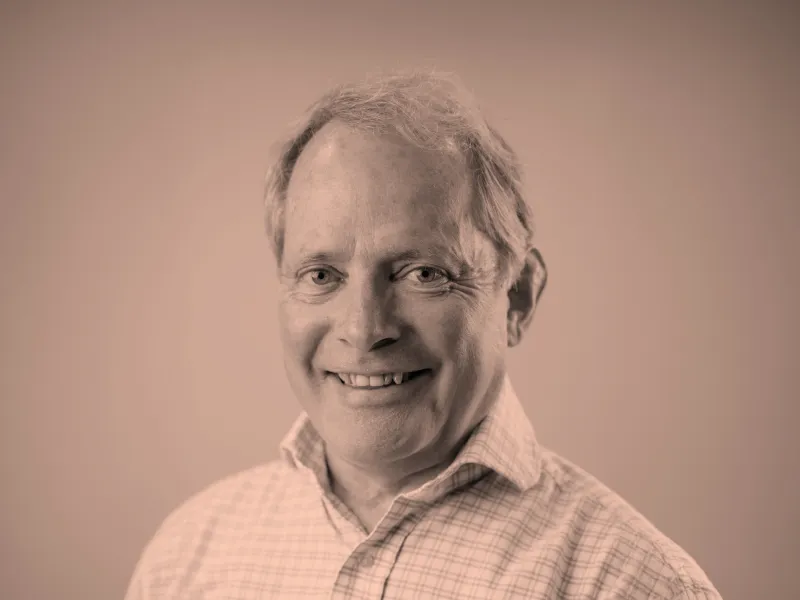
Graham Elliott
Graham has spent most of his career in the financial services industry, working in investment banking, and insurance. His experience includes time as Managing Director of Aqua Underwriting and as CEO of Oxygen Insurance Brokers.
In 2016 Graham co-founded Azur Group (as its CEO), a digital-first MGA that put customer experience at its heart. Azur quickly established itself as a leading High Net Worth MGA and created a technology arm, Azur Technology. In 2022, Azur Group split in half, with the technology part establishing itself as a standalone company – Azur Technology. Graham now also serves as non-Exec Chairman of Azur Technology.
When not shouting at politicians on the radio, Graham can be heard torturing the English Hymnal on the organ in Church.
More news
View all news

View all news